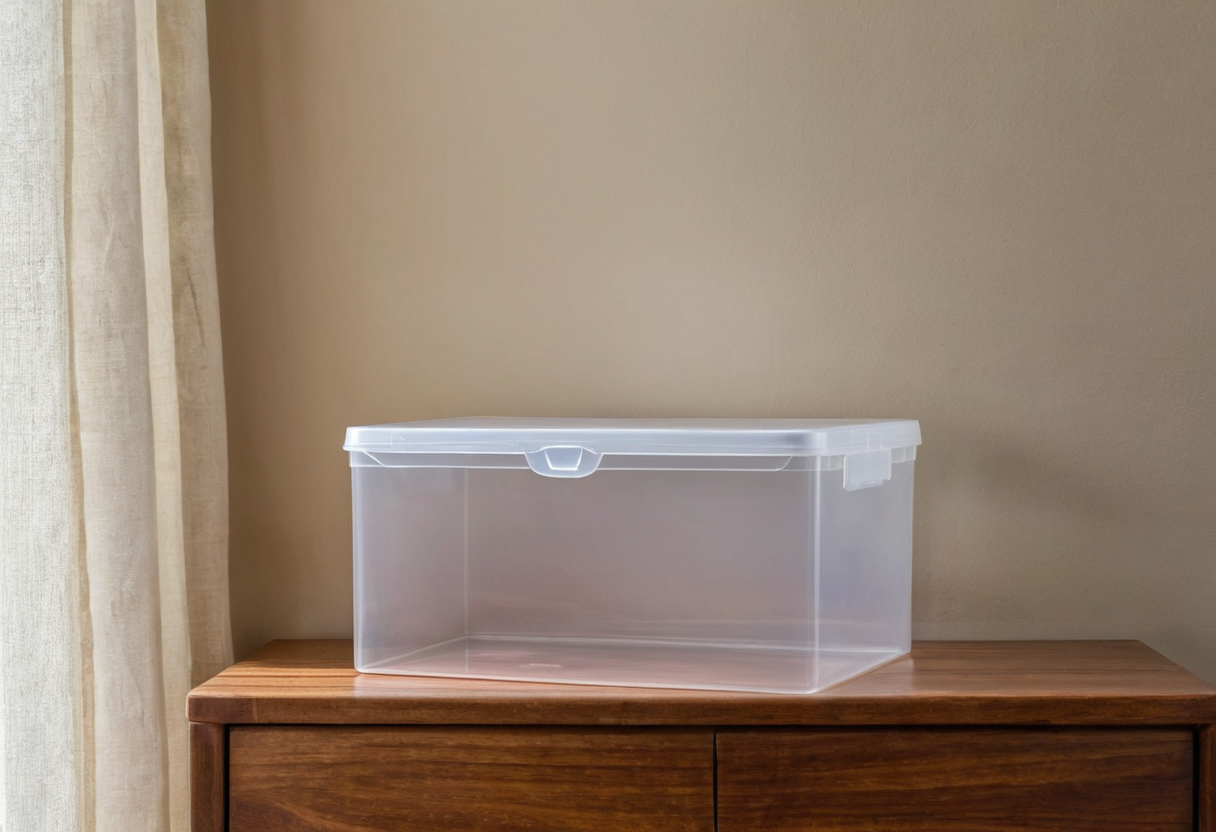
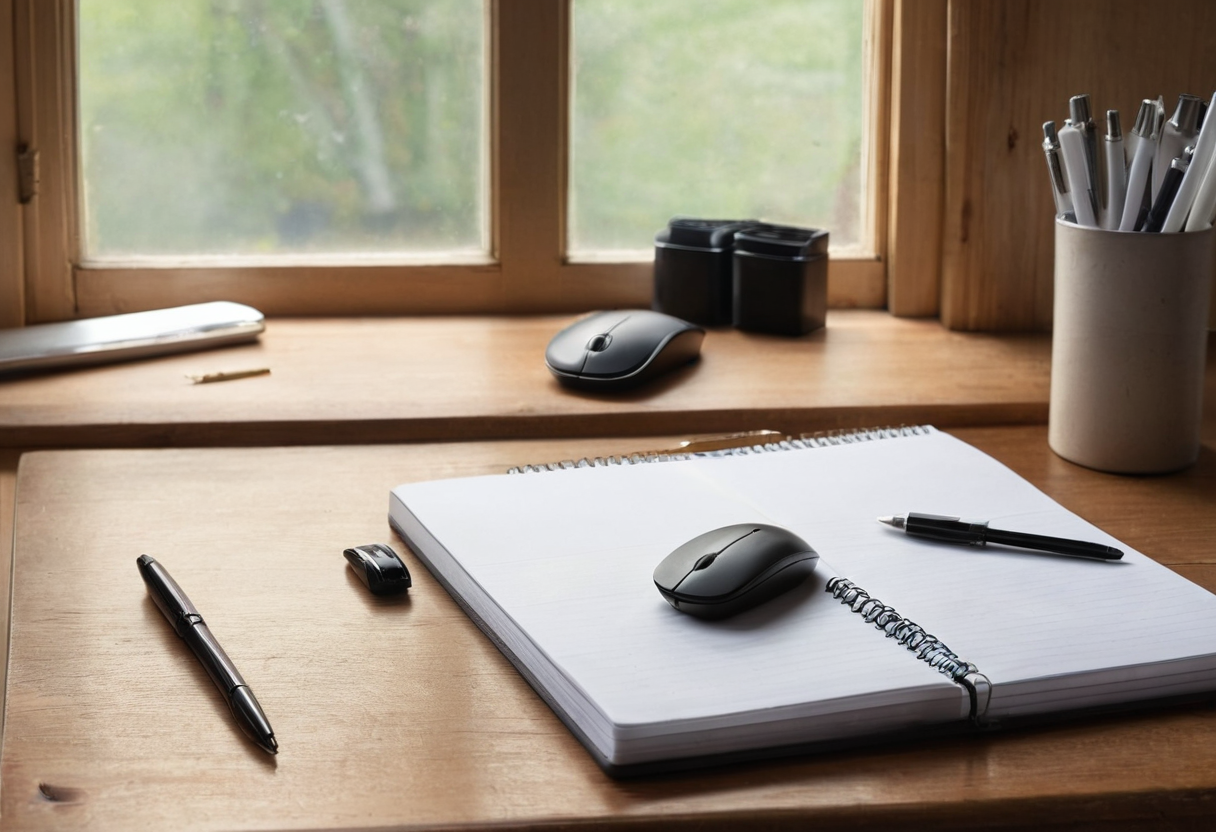
When a dining table doubles as a desk, the daily reset involves moving work items into a container. Before choosing a lidded box, compare its minimum internal dimensions directly against the closed footprint of your specific computer.
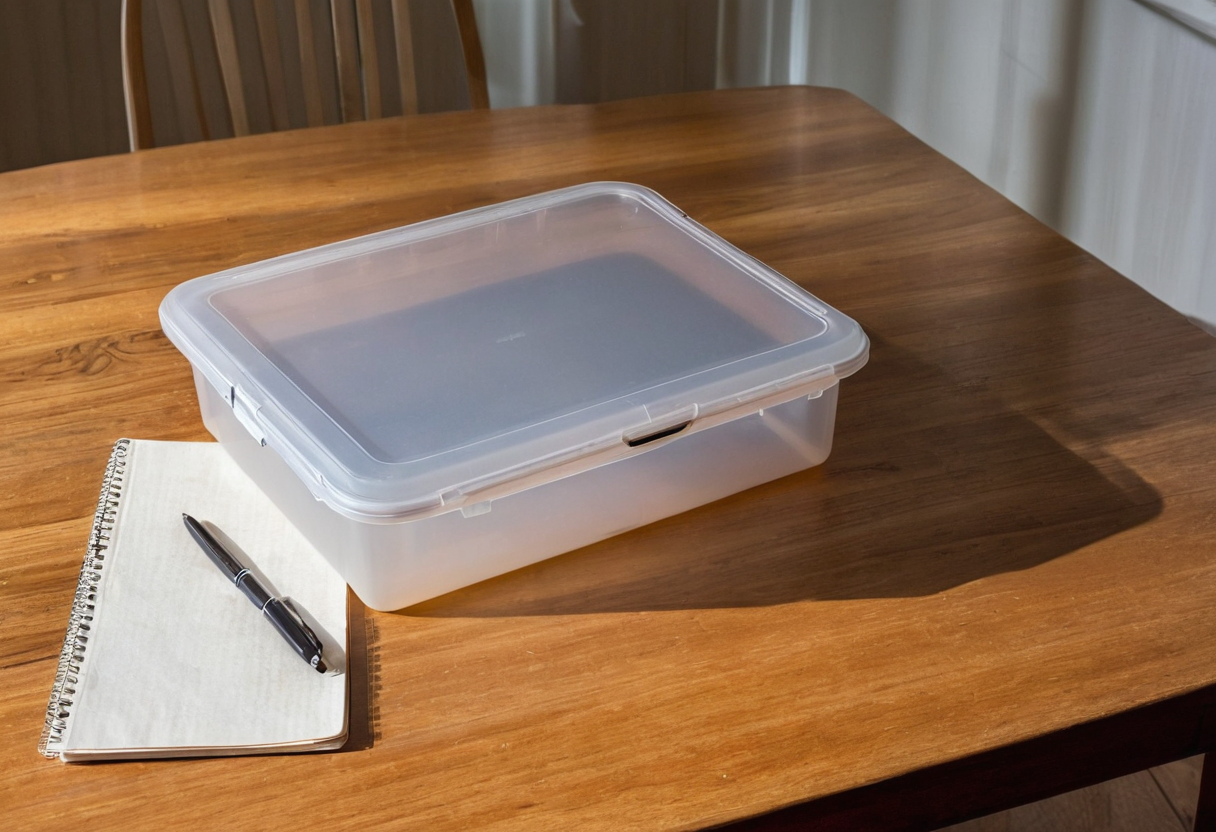
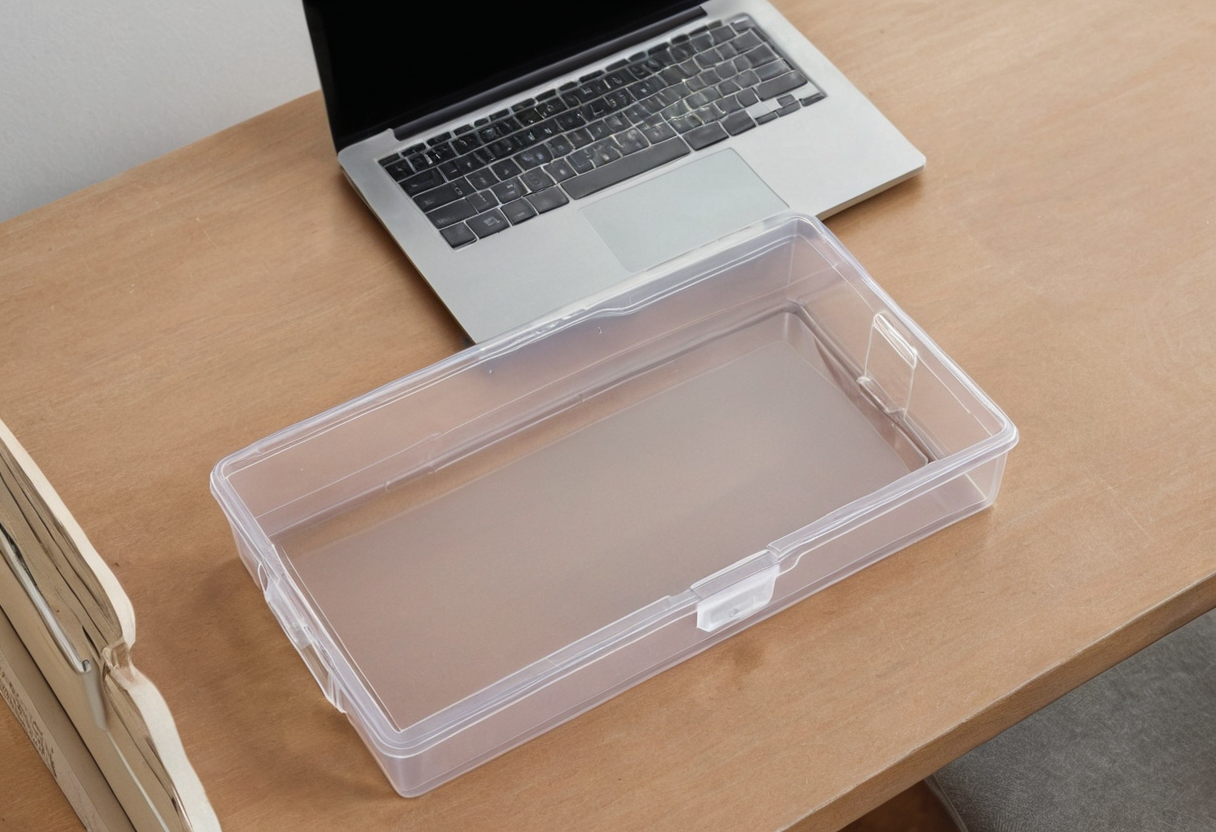
Consider the 13-inch MacBook Air M5. Apple Support lists its closed width at 11.97 inches and depth at 8.46 inches. Really Useful Products publishes a 9-litre box with outside dimensions of 395 by 255 by 155 mm, but states the minimum internal measurements are 335 by 210 by 140 mm. That 210 mm short side translates to roughly 8.27 inches. Because 8.27 inches is smaller than the laptop depth of 8.46 inches, this particular computer cannot lie flat inside that box in either orientation. The 9-litre container remains useful for loose papers or small accessories, depending on their own dimensions, just not for this specific bare device.
The same manufacturer lists an 18-litre box with outside dimensions of 480 by 390 by 200 mm and minimum internal dimensions of 395 by 335 by 170 mm. The larger horizontal interior provides room for the bare device to sit flat. However, those external dimensions mean the packed kit occupies significant space once removed from the dining surface. You must plan exactly where the container will live after the table is cleared for meals. If floor space is tight, explore other strategies like a rolling cart for tools to keep the kit mobile rather than stationary.
To apply this method to your own setup, measure your closed laptop width and depth with a tape measure. Then check the published minimum internal length and width of any prospective container. Never rely on screen diagonal or exterior box size for this calculation. Remember that adding a sleeve, charger, or mouse changes the required interior volume entirely; the measurements above only confirm whether the bare computer fits horizontally.
Keep the daily work kit limited strictly to the items that move every evening. Shared household objects should stay out of the container. Loose documents that do not travel with the computer might be better handled through a dedicated system for closed shelf papers. Verifying the math helps determine whether the items fit within the available interior space.