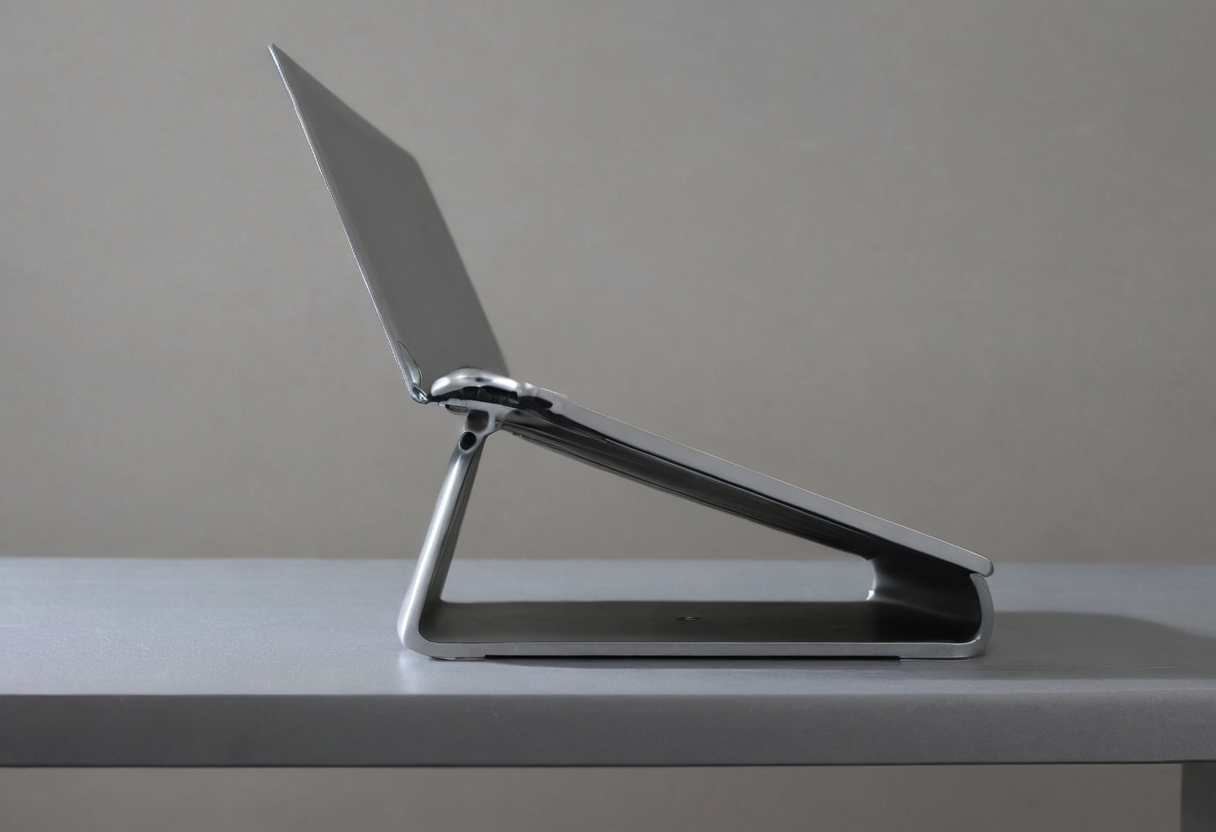
A common source of confusion in desk planning is treating a product’s overall dimensions as its desktop contact area. These two measurements serve different purposes. The base dimensions bound the base footprint but do not prove the location of contact pads. A model's QuickSpecs list height, width, and depth, but do not define the maximum movement envelope or overhang direction.
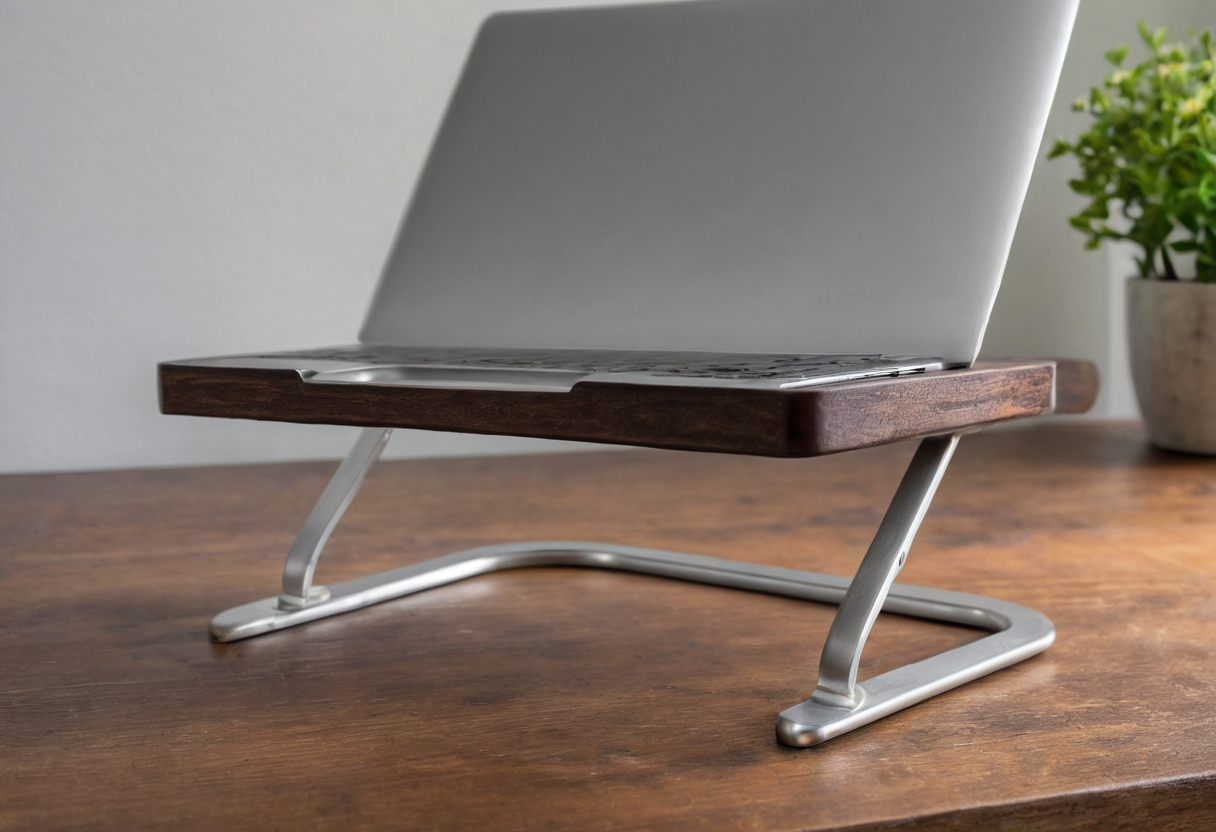
Published Specifications for the AW661AA
To illustrate the difference with exact numbers, consider the Ergotron HP Dual Hinge Notebook Stand, model AW661AA. According to the manufacturer's product specification, the base dimensions are 11.75 inches wide by 12.5 inches deep (29.9 x 31.8 cm). These are the published base dimensions, describing a bounding rectangle rather than the proven area of actual contact pads. The same stand features a 360-degree pan at the base and is designed for use with a separate external keyboard and mouse.
However, the QuickSpecs document for the AW661AA lists the overall dimensions as 8.7 inches high, 11.8 inches wide, and 14.2 inches deep (22 x 30 x 36 cm). Notice that the overall depth of 14.2 inches differs from the base depth of 12.5 inches. Overall dimensions do not prove which direction a hinge or platform overhangs, nor exact clearance at any orientation.
Drawing Rectangles for Desk Planning
A practical way to visualize these measurements is to draw two rectangles representing the AW661AA. These rectangles need not be nested or aligned; use them only to compare the stated dimensions. The inner rectangle uses the base dimensions of 11.75 by 12.5 inches. The outer rectangle uses the overall width and depth of 11.8 by 14.2 inches. At each candidate desk location, consider whether other objects would clash with the stand. The external keyboard, mouse, and cable ends require their own separate space allocation beyond these rectangles.
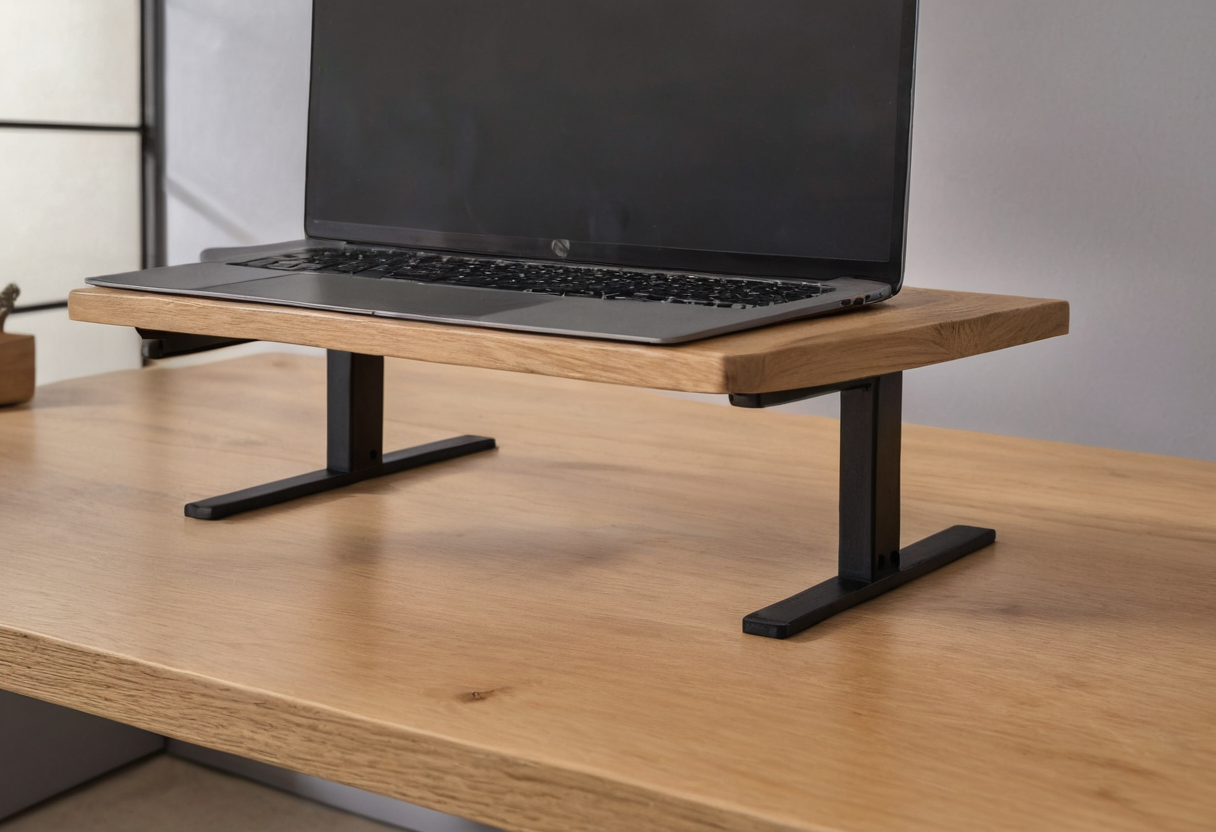
This distinction matters because assuming the base size equals the total required clearance can lead to collisions with nearby items. For example, understanding how much edge space a freestanding base requires compared to an alternative mounting method is explored further in our guide to monitor arm clamp setups. Similarly, mapping the protruding envelope of a stand follows the same spatial logic used when evaluating a task lamp reach across a workspace.
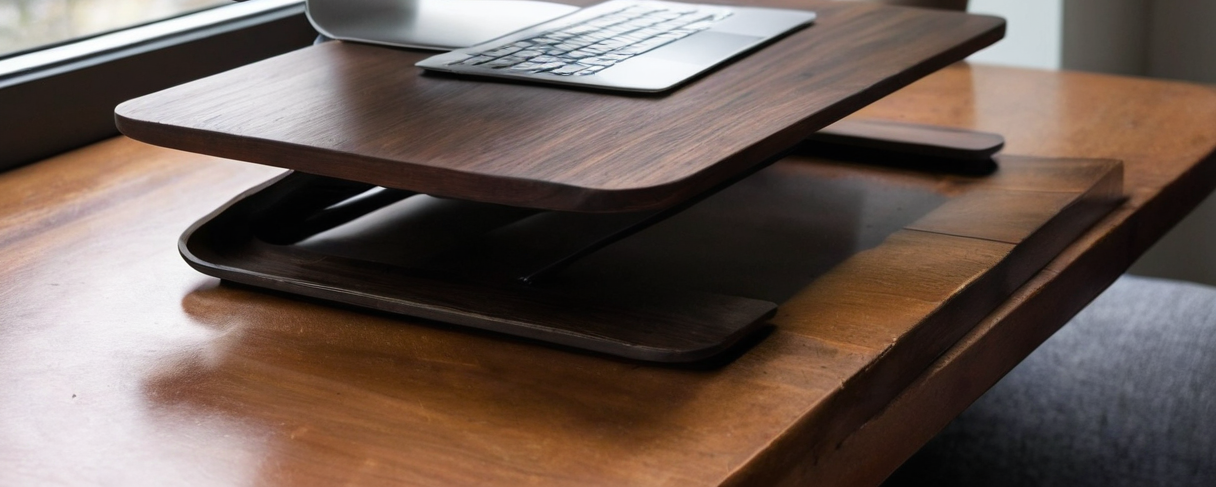
Overall Dimensions Are Not Always Base Dimensions
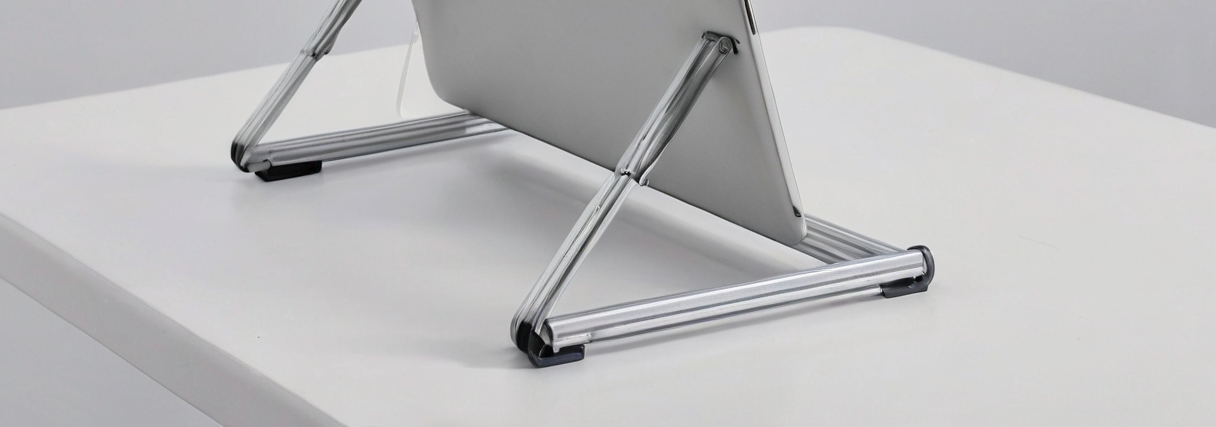
Not all manufacturers publish base dimensions separately. The Humanscale L6 laptop holder specification lists overall dimensions of 10.9 inches deep, 13.5 inches wide, and 10.1 inches high, alongside a 360-degree swivel base. It accommodates notebooks at least 10 inches wide and 6 inches deep. Crucially, these overall figures describe the entire product's bounding box, not the specific contact area of the base. Treating any product's overall dimensions as its base footprint can result in inaccurate desk layouts.
This nested-rectangle method provides a framework for mapping available desk geometry. Because individual desk shapes and movement patterns vary, this approach serves strictly as a planning tool rather than a universal fit standard. Always verify current compatibility and availability directly from documentation before purchasing.